
 We are proud to announce that Katherine Gottlieb is the newest member of Storyknife’s Board of Directors. Prior, she was a member of our advisory council. She has been part of Storyknife’s history even before the actual organization came into being.
Katherine Gottlieb is President and CEO of Southcentral Foundation, the non-profit health arm of Cook Inlet Region, Inc. Visiting Scientist at Harvard University. MacArthur Award recipient. CIRI shareholder, Old Harbor tribal member, Seldovia tribal member, mother of six and grandmother to many more.
In the spring of 1988, the Anchorage Daily News ran a story about a retreat for women writers on Whidbey Island in Washington state called Hedgebrook. Dana Stabenow read it and thought, How wonderful for some lucky writer. Katherine read it and called Dana and said, “You should apply for that.” Dana said, “Are you crazy? They’d never take me.” Katherine called again the next day and said, “Did you apply?” And the next day. And the next day. Her diligence worked, because Dana applied, was accepted, and became one of Hedgebrook’s first residents in October 1988.
In 1993, Dana Stabenow’s first Kate Shugak novel (Fun fact: Shugak is Katherine’s mom’s maiden name) was nominated for an Edgar Award. Katherine went to New York City to accompany Dana at the awards ceremony. Before they went downstairs to the banquet, she gave Dana an ivory storyknife brooch which Dana wore onstage when she won. Hedgebrook, to which Katherine nagged Dana to apply, was the inspiration for Storyknife, and, with her gift of that brooch, she named it, too. It seems only a natural progression of events that she is now a member of Storyknife’s Board of Directors and we are so honored to work with her.
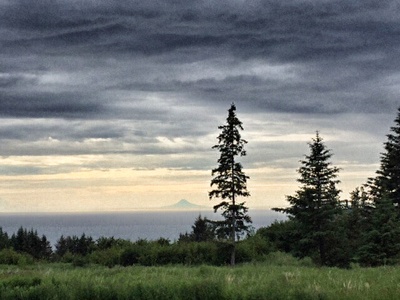
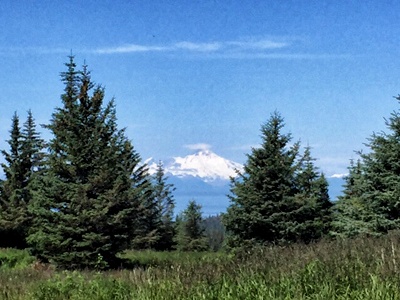
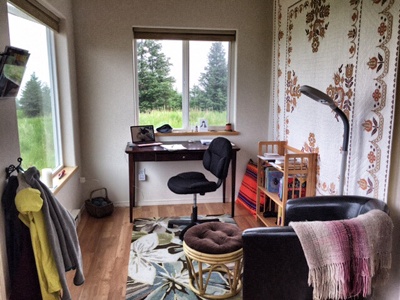
 “Sometimes having no expectations is the best way to approach the unknown. That is how I traveled to Homer, and the Storyknife Residency; an overpacked suitcase (I wore the same pants every day for two weeks, fancy skinny jeans were left untouched) and light on expectation. As a result, I experienced an abundance of riches. I didn’t even think about Homer’s inevitable beauty before I got there. I wanted to be awed, surprised even, and I was. The three volcanoes outside my window put things into perspective very quickly. If I needed any more reminding of my personal insignificance it was ready and waiting for me the moment I saw the mountains and the water. I had to shed the notion that I was somehow indulging myself by getting lost in Alaska for 14 days to focus on me and the story I wanted to write. That lingered a bit too long, three days to be exact, and is a by product of being a mother and a woman. The center was not going to collapse because I was in my cabin writing and minding my own business. This understanding was just as important as the 21,000 words I wrote in two weeks. The cabin, the water, mountains, wildflowers I bought at the Farmer’s Market, Erin and Dana all gave me permission to be. Yes, I needed that permission, even though I have been writing for half my life and producing work that sees publication. Everything is slower in Homer and people smile at you, make eye contact. Dana introduced me to locals and people were naturally warm. Even though I was alone most of the time, I didn’t feel alone. But I felt space, I felt my chest expand.
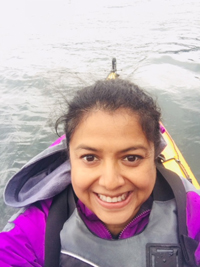 Back to my smallness in the face of natural beauty and the wildness of things: it’s good, it’s necessary for me to be reminded of it, so I can create. I kayaked on the bay and was exhausted by the end of it, but my lungs were filled with fresh salt air and the next day I sat down and wrote a chapter that I am proud of. I was the straggler in the kayak group. It was rainy and cold, and the currents were strong, and I couldn’t get a good picture of a cheeky baby otter, and once again, my smallness hit me
  in the face, along with the salt water and how short my arms were. And then I felt it, something I had not felt in decades, peace. Everything around me was saying, it’s going to be ok. Whatever “it” was. It didn’t last. I came back to reality, however I achieved clarity on a few things because of all the silence I was surrounded by and produced 21,000 words. Had I stayed another two weeks I would have finished the first draft of my new novel. Of that I am sure. I must come back. It’s healing. And necessary.”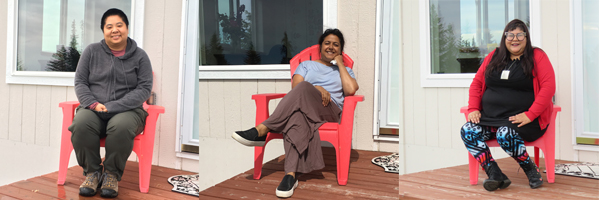
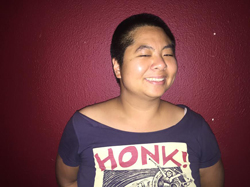 Ching-In Chen is the author of The Heart’s Traffic (Arktoi/Red Hen Press, 2009) and recombinant (Kelsey Street Press, 2017).They are a Kundiman, Lambda and Callaloo Fellow and a member of the Macondo and Voices of Our Nations Arts Foundations writing communities. Chen is also the co-editor of The Revolution Starts at Home: Confronting Intimate Violence Within Activist Communities (South End Press, 2011; AK Press 2016) and Here Is a Pen: an Anthology of West Coast Kundiman Poets (Achiote Press, 2009). Their work has appeared in The Best American Experimental Writing, The &NOW Awards 3: The Best Innovative Writing, and Troubling the Line: Trans and Genderqueer Poetry and Poetics. A poetry editor of the Texas Review, they currently teach creative writing at Sam Houston State University.
 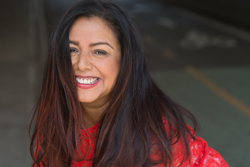 Sharbari Ahmed’s fiction has appeared in The Gettysburg Review, The Asian Pacific American Journal, Catamaran, Caravan Magazine, Inroads, and Wasafiri among others and is forthcoming in Painted Bride Quarterly. She was on the writing team for Season One of the TV Series, “Quantico” on ABC. Most recently she wrote the screen adaptation of Mitali Perkin’s Middle Grade novel Rickshaw Girl. Her debut book The Ocean of Mrs. Nagai: Stories was released in November 2013 by Daily Star Books. She is a Tribeca All Access Fellow for her screenplay Raisins Not Virgins. She is on the faculty of the MFA program at Manhattanville College and the Film Television MA Program at Sacred Heart University. She was born in Bangladesh and raised in New York, Connecticut and Ethiopia and lives in Darien, CT.
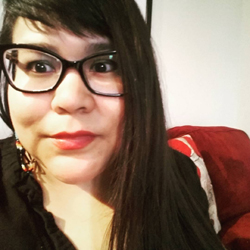 Casandra Lopez is a Chicana and California Indian (Cahuilla/Tongva/ Luiseño) writer who’s received support from CantoMundo, Bread Loaf and Jackstraw. She’s been selected for residencies with SAR and Hedgebrook. Her chapbook, Where Bullet Breaks was published by the Sequoyah National Research Center and her poetry collection Brother Bullet is forthcoming from University of Arizona press. She’s a founding editor of As Us and teaches at Northwest Indian College.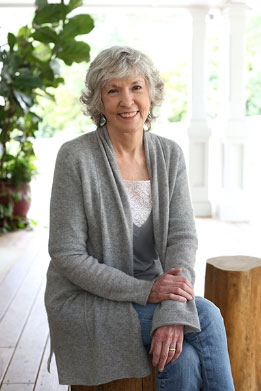
 This post was written by Ruby Hansen Murray, Storyknife’s September 2017 resident fellow. All photographs taken by Ruby Hansen Murray.
  I’ve come to write, and I do. These are the weeks of hurricanes flooding Houston, slamming the Virgin Islands and Puerto Rico, sweeping Florida, and I speak with dear friends who live in that striking environment so unlike this one, but so similarly vulnerable to climate change. I am writing essays about the Osage homeland in the middle of the continent and organizing my novel with an emotional logic. But I’m also curious about the Kenai Peninsula where my husband’s family fished and which was the site of an early oil discovery in Alaska.
 A week into September, the tourist and fishing season is over. There’s the tug to experience the area—the aquamarine waters and white breakers along the spit or the textures and scale of the glaciers across Kachemak Bay, over and against the views from my desk. Whether I sit in the cabin or drive to town or walk the spit, I’m rewarded. Sunlight glistens on the fur of a black bear that passes and two moose check out the moose-proof cage the gardener wrapped around a high-bush cranberry just outside my window. For most of the month, whether I stay home or explore the world around Homer, I’m in a dream state. The place, the generous friends I make, the opportunity to spend this dedicated time are synergistic and powerful.
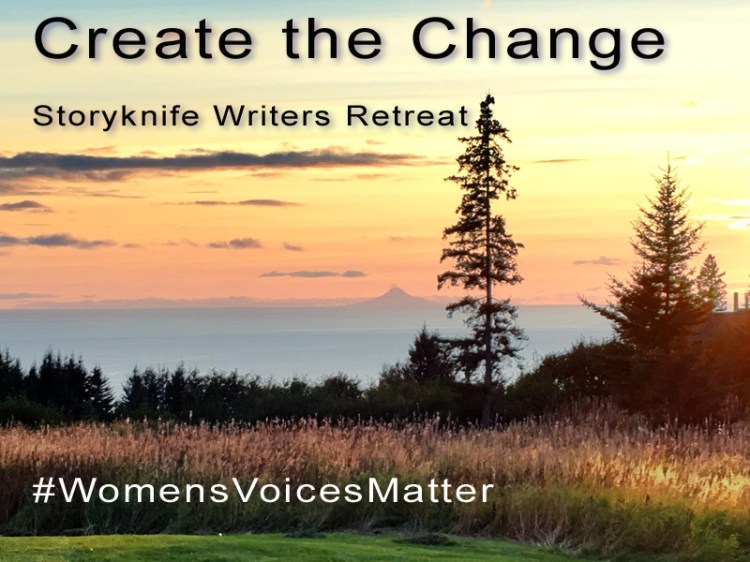 Dear Friends of Storyknife,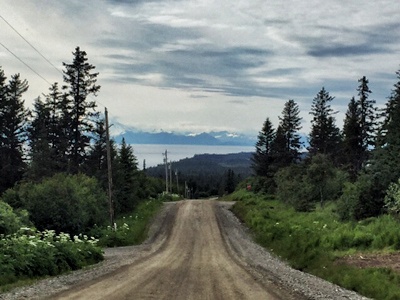

 Storyknife Writers Retreat