from Storyknife founder, Dana Stabenow
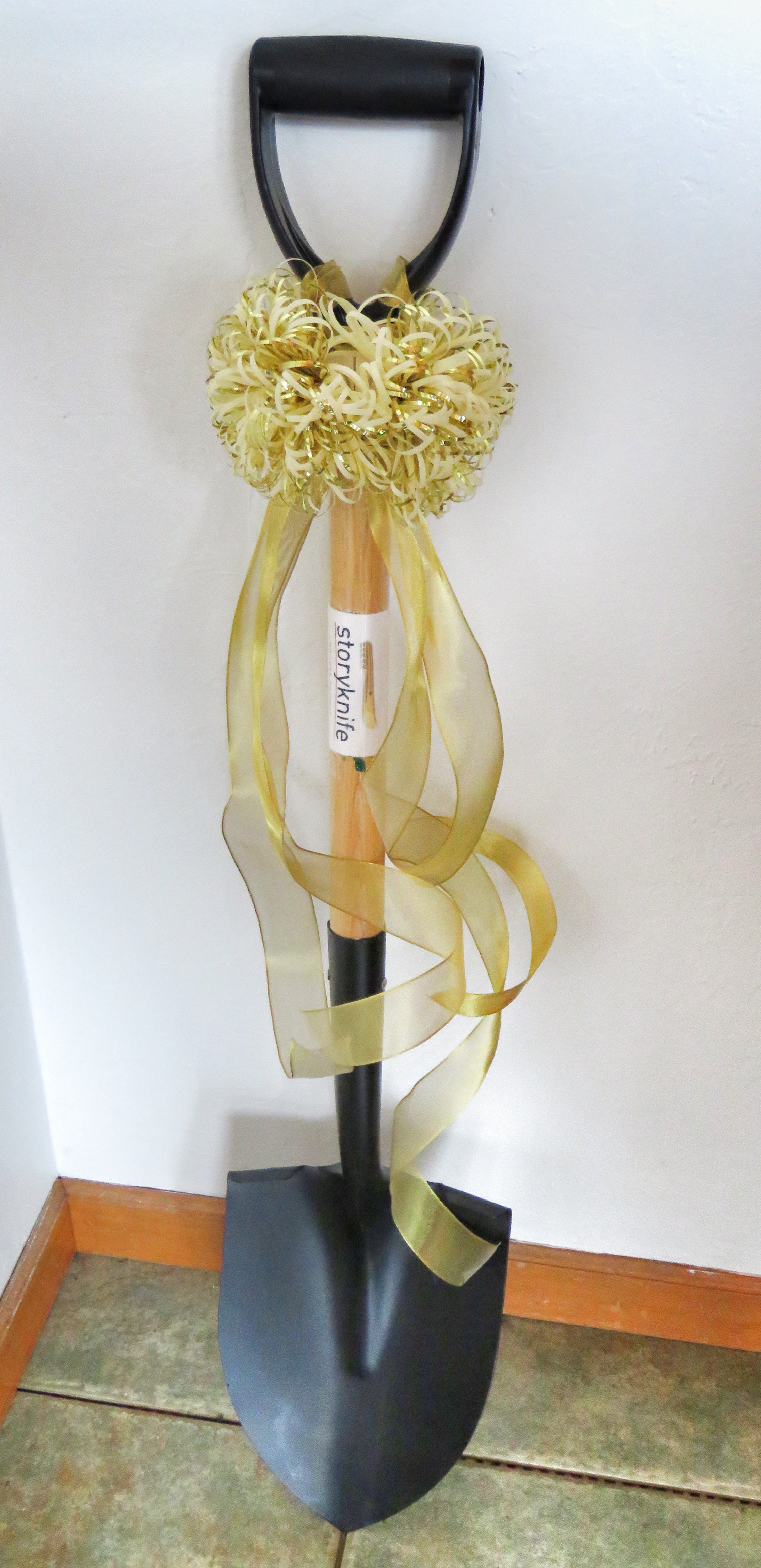 Thank you all for coming today to help me celebrate as my dream comes true. I could say that this dream dates back 14 years, to 2005, when I bought this land and moved back to Homer. But in reality it goes back a full 30 years, to 1989, when the Anchorage Daily News ran a story about Hedgebrook, a retreat for women writers on Whidbey Island in Puget Sound, and my best friend bullied me into applying. I was accepted as a resident in the fall of that year.
For two glorious weeks I spent every day in Waterfall Cabin, writing, and each evening I gathered with my fellow residents at the farmhouse to have dinner, talk writer shop, tell publishing war stories, and as I later discovered, make friends for life.
Writers are odd people, no doubt about it. We sit alone everyday in a room with a laptop, painfully extruding one word at a time and like as not deleting it five minutes later. We are almost all of us introverts and hermits, and nobody really knows how we do what we do, least of all us. Hedgebrook? Was the first place where I met people who acted like writing is a real job. “Sit down,” Nancy said when I got up to help clear the table at my first dinner there. “You’ve already done your work for the day.”
It is not hyperbole to say that Hedgebrook’s radical hospitality changed my life. I might not have been truly a professional writer when I arrived there but I was when I left. My stay at Hedgebrook gave me identity, agency, confidence. It also gave me a sense of obligation, and the determination to find a way to give back.
So, this time next year, there will be a house here at Storyknife, Eva’s House, and six cabins, Carol, Betty, Diana, Evangeline, Katie, and a sixth cabin still to be named. Inside each of those cabins will be a writer. She will spend all day working at her novel, her short story, her play, her poem. At the end of every day, she will join her fellow residents at Eva’s House for dinner, to talk writer shop, to tell publishing war stories, and to make friends for life. When she leaves, she will have learned beyond any question that her voice has value and that her work is worthy of respect and support.
You will make this possible, you Friends of Storyknife, those of you here today as well as all of you who couldn’t attend in person. I thought Storyknife would be a much harder sell, but you all got it, instantly, that an experience like this one can be a life-changing event for women authors, who are, sadly, still underpublished, underprinted, underreviewed, and undersold compared with their male contemporaries. Your generosity, your support for Storyknife flies in the face of all of that.
You Friends of Storyknife will provide a second space where women’s voices will be nourished and validated, and where they will build a community of other writers so they don’t feel quite so isolated and alone. When they leave, they will carry with them identity, agency, and the confidence they need to raise their voices in print and to succeed at this most improbable of professions.
Allow me please to call out just a few of you by name. Nancy Nordhoff, for building Hedgebrook, for showing me why, and how. Katherine Gottlieb, for making me apply. Attorney Dee Ford, for writing our bylaws and getting us incorporated pro bono. Charlaine Harris and Sandy Nolfi and so many others for supporting Storyknife financially even before we had nonprofit status. Pati Crofut, for getting us our 501c3 status. My amazing board, Pati Crofut, Nora Elliott, Rhonda Sleighter, Jeannie Penney, Paula Martin, Katherine Gottlieb, and Pearl Brower, for cheerfully volunteering their skills and experience in support of what was once only a crazy idea. Scott Bauer, our builder, who while he was finishing my house in August 2005 was the first person I told about Storyknife, and he didn’t laugh. Erin Hollowell, the Wonder Woman of executive directors, who built our first capital campaign and is in large part responsible for why we’re standing here today. The foundations who believed enough to write the necessary infrastructure checks, Rasmuson, Atwood, Southcentral Foundation, Old Harbor Native Corporation, and one we hope to be named later this month. The individual donors who gave large and small, Patrice Krant, Peggy Shumaker and Joe Usibelli, Rika and John Mouw, Katherine and Kevin Gottlieb, Carl Marrs, Tony Kinderknecht, Jenny and Sue and Lee at the Homer Bookstore, Nancy Nordhoff, again, still, always. As of this morning, there are 237 of you, and over half of you have given more than once and many of you more than twice.
On behalf of the hundreds of women writers who will reside and work and flourish here at Storyknife, thank you for helping make their dreams come true.
—–
Several ways to support Storyknife going onward. Your donations of any kind will go directly to support writing residencies for women writers.
Donate via AmazonSmile
Sign up for our newsletter
Follow us on Facebook